Wednesday, April 19, 2006

Art Retouching


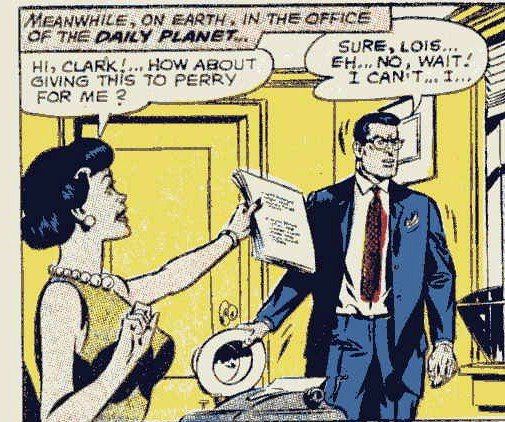
The fact that DC Comics rarely let the great Jack Kirby's version of Superman or Jimmy Olsen run without being retouched (or often completely redrawn) during the King's early seventies run remains a source of some controversy amongst Kirby fans. More often than not, Al Plastino's Supes or Murphy Anderson's Jimmy interacted with Jack's New Gods characters. As I pointed out in my previous post, though, Jack was hardly the only one to recieve this treatment. In fact, you'd be hard pressed to find a Marvel comic during a long period in the seventies that didn't have sometimes jarring John Romita heads on characters drawn by other artists. Heck, even the classic HULK ANNUAL number one with it's sweaty Steranko cover features a Marie Severin pasteover face! In fact, the very next comic I picked up this morning, ACTION number 342 from 1966 features a late Wayne Boring Superman story but, rather obviously to any Superman Family fan of the sixties, a Kurt Schaffenberger face on Lois Lane! Apparently the man who had drawn the series regularly for about two decades at that point couldn't draw a Lois that editor Mort Weisinger thought looked like Lois.

Lois Lane in the Fourth World


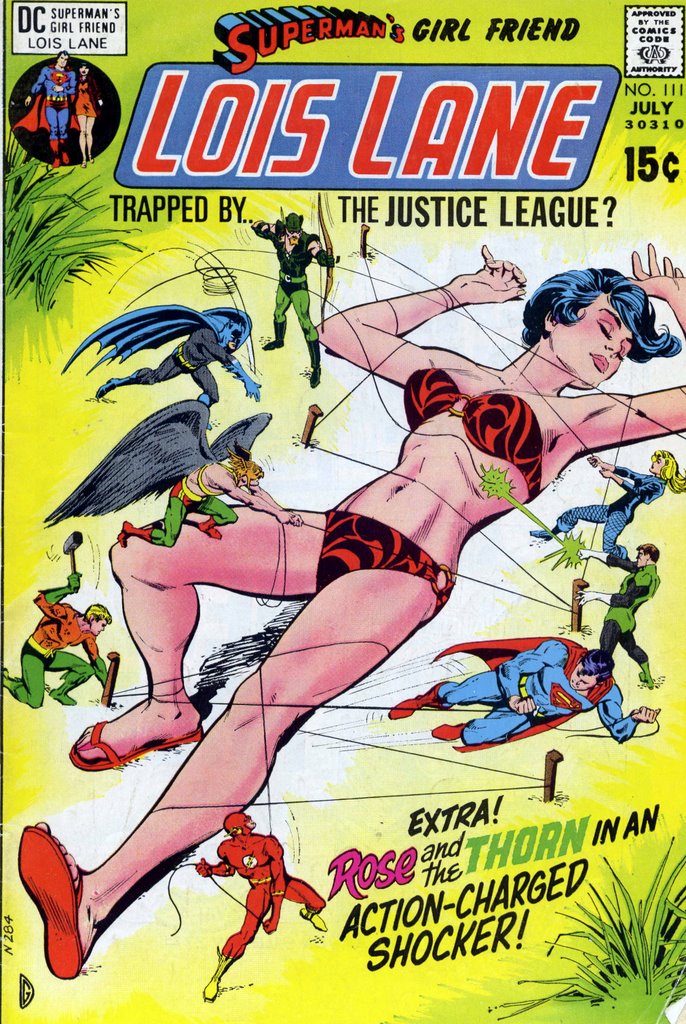
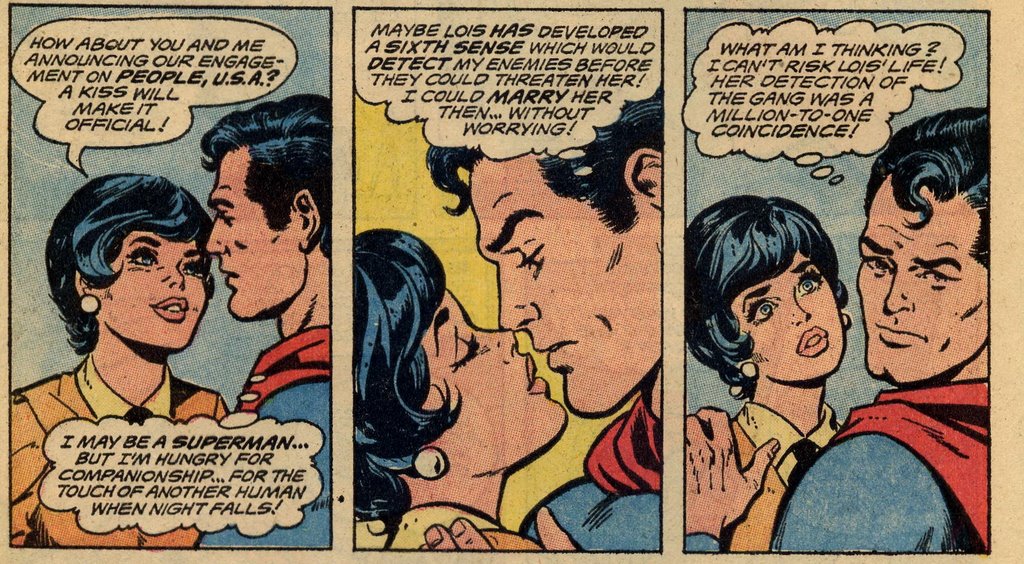
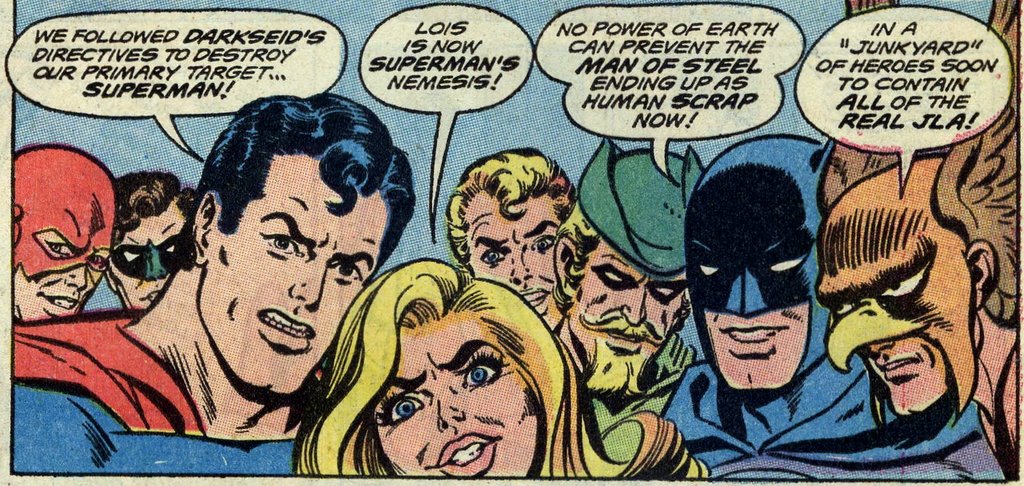
Jack Kirby’s so-called "Fourth World" books in the early seventies (NEW GODS, MISTER MIRACLE, FOREVER PEOPLE and JIMMY OLSEN) would, of course, have long-ranging effects in the DC Universe, particularly in the Superman titles. At the time, however, they were pretty much ignored by all of the other editors and writers with one notable exception. Legendary DC writer Robert Kanigher seems to have taken a liking to the concepts as they began to appear in the LOIS LANE issues he wrote. A mention here and there of Intergang, Morgan Edge, Darkseid, the Black Racer and, in the issue seen here, a full-scale plot based on "The Project" from Kirby’s JIMMY OLSEN. It seems that the mini Justice Leaguers seen on the cover are little "DNAliens" who tie Lois up on page two literally just long enough to put a drop of something on her lips that’s designed to make Superman go berserk when she kisses him. They later show up at her apartment but our intrepid heroine is prepared, having called the Project herself. They send her a bunch of, in Lois’ words, "Mini-me’s" specifically designed to save the day. Note that nothing is ever said here or in any other issue about what happened to either the mini-Leaguers or the mini-Loises. The Project somehow knows about the lips issue, too, and sends Lois a special lipstick that automatically stops the problem of the Man of Steel freaking out, just in time to leave room for a better written and really nicely drawn 8 page ROSE AND THE THORN story with art by Gray Morrow. Kanigher’s writing on this back-up strip was consistently better than on his Lois stories. Lois is depicted as a TV interviewer (although still working at the Daily Planet for some reason) who cares deeply about poor people but spends every waking (and sleeping for that matter) moment dreaming of Superman. Superman is likewise mooning over her the whole time! If E. Nelson Bridwell weren't the editor during this period, I'd swear the whole "story" was one of Julie Schwartz's famous "Draw the cover and then figure out how to fit it into the issue" bits. Lois looks good here with her seventies hairdo and fashions, provided by veteran comics artist Werner Roth, probably best known for a long, workmanlike stint on Marvel’s pre-revamp UNCANNY X-MEN. Roth’s Superman, however, appears to have been too off-model as most of his appearances, as with Kirby’s Man of Steel in the actual Fourth World titles, are obviously redrawn and/or heavily retouched by Murphy Anderson (along with at least the Hawkman head in the panel seen here, too!)
Around this time, I actually had a letter published in LOIS LANE mentioning a lot of these issues. I’m not sure now what it said, though because A) I don’t seem to have a copy of the issue anymore and B) as I recall, DC edited out anything negative I had to say and what was left was mostly praise for ROSE AND THE THORN.

Tuesday, April 18, 2006

OTR Stars at Cincinnati


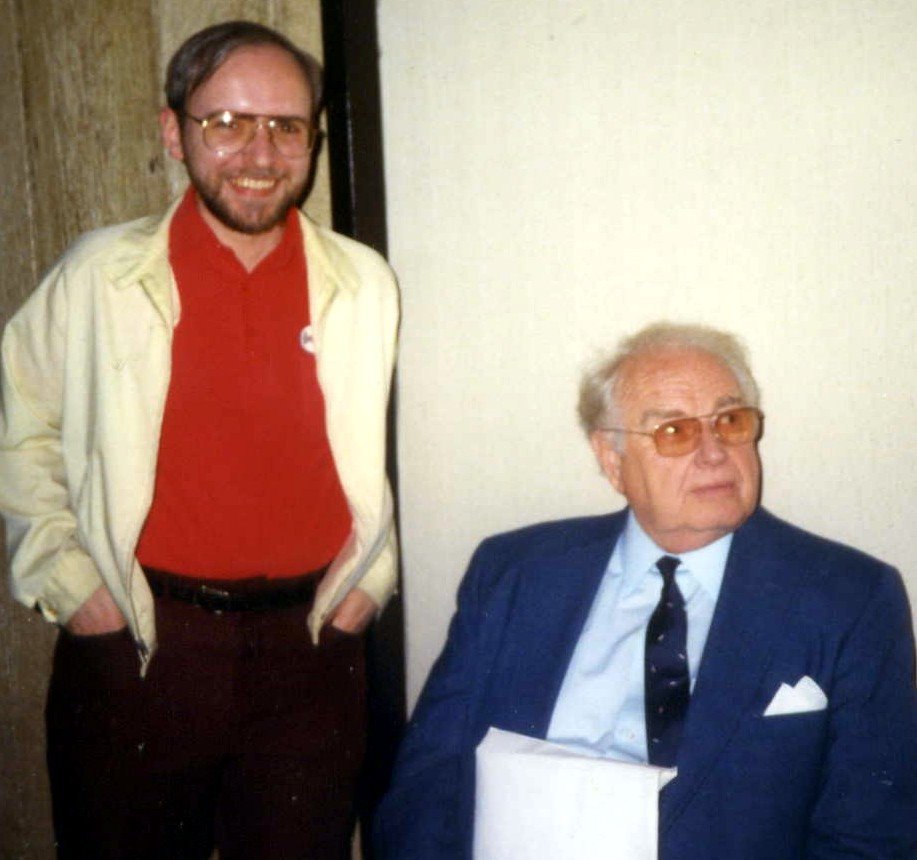
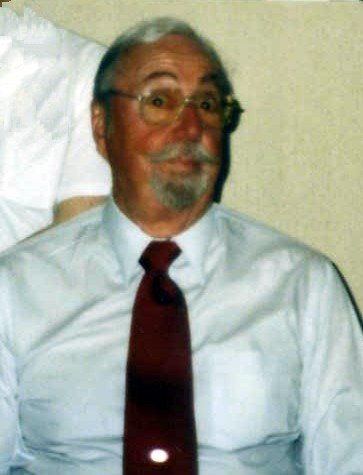
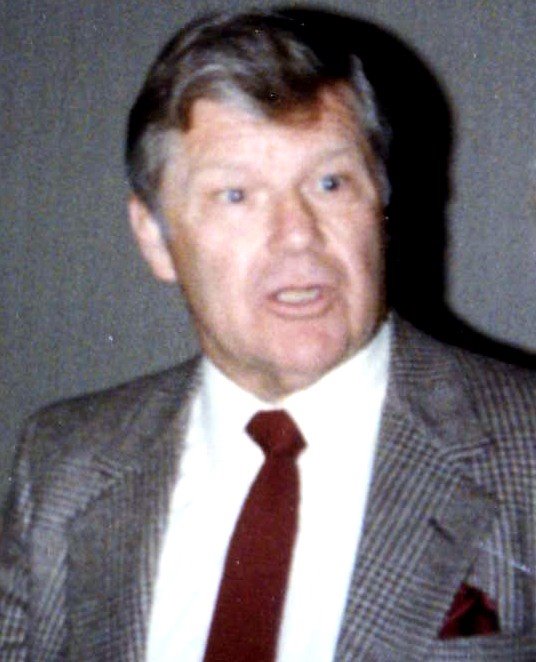
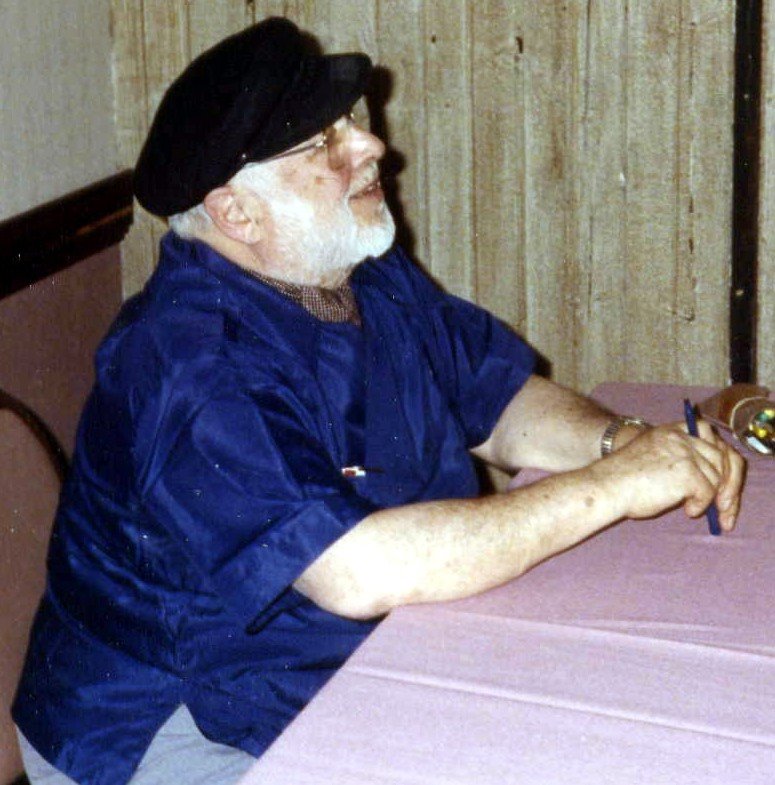
For some reason, my wife and I seem to have stopped taking a camera after the first couple of years but here are a few snapshots of the stars who attended those early Old Time Radio Conventions in Cincinnati. First is myself with Parley Baer. Parley was one of the all-time great character actors, appearing on radio in scores of roles from the forties through the seventies. His best known role on the air was that of Chester Proudfoot, Marshal Dillon's sidekick on radio's GUNSMOKE. On television he was a semi-regular on early ANDY GRIFFITH shows as the Mayor of Mayberry. He later would appear on just about every major sitcom in the sixties including several turns on BEWITCHED and THE ADDAMS FAMILY. In films, he was a familiar presence in heavy dramas such as THE YOUNG LIONS with Marlon Brando up through DAVE with Kevin Kline. I was priviliged to appear opposite Parley in re-creations of ESCAPE, NICK CARTER-MASTER DETECTIVE and SUSPENSE.
Willard Waterman was a working character actor who took over the role of THE GREAT GILDERSLEEVE in mid-1950 after its originator Hal Peary left. Waterman was blessed and cursed with a voice that sounded almost exactly like Peary’s when he wanted it to and the show continued its reign of popularity. He also appeared in films including AUNTIE MAME, THE APARTMENT and HOLLYWOOD OR BUST with Martin and Lewis. After a regular role on TV’s DENNIS THE MENACE and several years of guest-starring on sitcoms, he moved to Broadway appearing in, among other plays, the musical revival of MAME. A guest at two early conventions in Cincy, I murdered him in a WHISTLER episode and later played gravely voiced Judge Hooker opposite him in a GREAT GILDERSLEEVE re-creation.
Bob Hastings was radio’s best remembered ARCHIE ANDREWS and appeared in many other series including numerous episodes of the mid-fifties science fiction classic, X MINUS ONE. On TV, he became well known as Lt. Elroy Carpenter opposite Joe Flynn on McHALE’S NAVY and later was seen as Kelsey, the bartender who owned the bar on ALL IN THE FAMILY that eventually became ARCHIE BUNKER’S PLACE. Appearing in scores of other TV series including, KOLCHAK-THE NIGHT STALKER and WONDER WOMAN, he still found time to do a number of films, often for Disney Studios in the seventies including THE BOATNIKS and NO DEPOSIT, NO RETURN. More recently he was the voice of Comissioner Gordon in Paul Dini’s version of BATMAN and voiced a character in the popular video game, JAK AND DAXTER. Bob has been the most regular guest in Cincinnati and I have enjoyed appearing opposite him in about a dozen re-creations including a Ray Bradbury X MINUS ONE and twice as Jughead in ARCHIE ANDREWS.
Ezra Stone, radio’s Henry Aldrich, had just lost his wife (actress Sara Seeger) when he appeared at the Convention. Stone had quite the listing in WHO’S WHO with years of philanthropic work. Originally an assistant to legendary Broadway producer George Abbott, Ezra was cast as Henry in Clifford Goldsmith’s original stage appearance of the Aldrich Family. He followed the role to some radio sketches which eventually evolved into the long-running ALDRICH FAMILY series, along with THE GREAT GILDERSLEEVE, one of the first true sitcoms. During the war, Ezra was in the army where he and Irving Berlin had a famous friendship and an infamous falling out during the creation of the musical play and later film THIS IS THE ARMY. After radio, Ezra became a popular TV director, helming episodes of dozens of series including long runs on LOST IN SPACE, THE MUNSTERS and Diana Rigg’s ill-fated sitcom, DIANA. Actor Mark Goddard from LOST IN SPACE once told me that Ezra was a favorite director of everyone on the set. I appeared with Ezra as sidekick Homer in THE ALDRICH FAMILY and in several roles in a re-creation of the LUX RADIO THEATRE script of George S. Kaufman’s YOU CAN"T TAKE IT WITH YOU which soon after was added to Ezra’s WHO’S WHO listing! He told me I was one of the best "Homers" he had worked with (Yeah, I know. What was he gonna say? I sucked?) and I learned more about radio acting from him than from any of the fine radio actors with whom it has been my great pleasure to appear.

One Fine Stooge


It’s been said that one of the true differences between the sexes is that women simply don’t "get" the Three Stooges. I have found this to be true more often than not. While women abhor their "violence," males of all ages tend to love them and appreciate them for their humor and good-naturedness.
Beginning with Moe Howard’s posthumously published autobiography the history of the Three Stooges has been chronicled in more volumes than the boys themselves could have ever imagined. Some are very good, some less so. All tell the story of the three (okay, make that ultimately six) guys who started out being second bananas and finally, long past what was thought to have been their prime, arguably became the biggest stars of the sixties after Batman, the Beatles and 007.
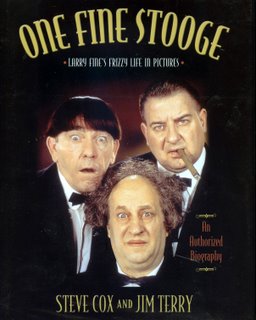
ONE FINE STOOGE by Stephen Cox and Jim Terry is the latest worthy book on the Stooges, a photo-filled authorized biography of frizzy-haired Larry Fine. The authors were granted unprecedented access to Larry’s friends, pictures and papers so there are many great stories here that have not been told before (including the controversies that led to Larry virtually disowning his OWN book, STROKE OF LUCK after the co-author screwed around with the facts).
Larry was, as in the title of his brother’s previous book, THE STOOGE IN THE MIDDLE and often served as a foil to both Moe and whoever was filling the third spot. On occasion he was given memorable bits but for the most part he was required to be there simply because the dynamics of the act didn’t work without him. In the extensive biographical bits about the real man, Larry comes across as nice. Very nice. He seems to have been a quiet, amusing man who would do anything to help someone out. He stayed with his abusive, alcoholic wife until her death out of pure love and rarely let any of his personal sorrow keep him from making someone laugh. A remembrance in the book by fellow Philadelphian Frankie Avalon recalls Larry as just a regular guy that the young singer liked hanging out with on sets, talking about the old neighborhood.
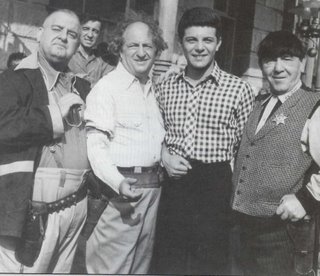
After the Stooges initial film career ground to a halt with ever diminishing returns in the late fifties, the act’s contract was terminated. As their old shows were rediscovered by kids on television, their career was revived and before long they were doing full length features and filling stadiums in personal appearances. Throughout the sixties, the boys did movies, TV appearances, cameos, and charity events. The last time I saw Larry, Moe and Curly Joe was on a 1969 episode of the game show TRUTH OR CONSEQUENCES where I was absolutely flabbergasted to see how short they all were next to Bob Barker. According to the book, this was their final TV appearance. In 1970, while working on a TV pilot called KOOK’S TOUR (that was eventually released on 8MM film of all things!), Larry had a stroke and ended up in the Motion Picture Country Home. Far from stopping him, though, as Larry recovered enough to do so, he became more involved in charity work than ever, occasionally, as seen here, even abetted by his old crony, Moe.
As I said, Cox and Terry have come up with a worthy addition to Stooge history. Was it necessary? Perhaps not. It is, however, a fascinating portrait of a man everyone knows and yet few people really knew. Now if only someone would do a definitive bio on Shemp, the funniest one of them all and a great character actor to boot!

Monday, April 17, 2006

Disney Manga


Video game characters such as Lara Croft, the various Pokemon and even Mario and Luigi live in richly detailed virtual worlds all their own. Perhaps that’s why I found it a bit disconcerting to have KINGDOM HEARTS, one of my son’s favorites suddenly pop up with anime-style Disney characters! The graphic novel version seen here features young spikey-haired traditional anime/video game hero Sora teaming up with sidekicks Donald Duck and Goofy! As their quest goes along they have encounters with Alice, the Cheshire Cat, 101 dalmatians, Chip and Dale and more! It’s all so…so…weird! Game’s kinda cool though!

Sunday, April 16, 2006

Sidney/Cedric

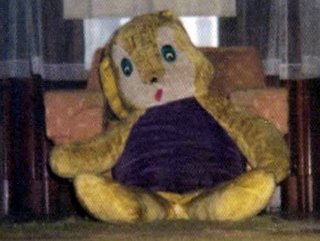
Silly me. I already ran a piece om HARVEY a while back. Oh well, here we see my OWN giant rabbit who lived with us from the late seventies into the mid-eighties. His name was Sidney Australia or, in the vaguest OTR tie-in of them all, Cedric Weehunt, the name of a character from radio's LUM AND ABNER. Sidney (note the lack of "y")was my choice for name, Cedric was what my father always called him. Around 1978, the landlord in our building asked me to help clean out an apartment. It seems the quiet, softspoken, mousy little girl that lived there left the place strewn with half-melted candles, exotic alcohol bottles, incense ashes, black light Kama Sutra posters and one four and a half foot tall stuffed rabbit! The landlord said I could keep anything I wanted so the rabbit came to live with me (along with the Kama Sutra posters but that's another story. Hotcha!) Growing up, I had never had stuffed teddy bears like most kids. My parents had always bought me stuffed bunnies for some reason so to me this was the ultimate manifestation of that. Although he's sitting on the floor in front of it here, Sidney sat in that gold colored chair in the living room for years like it was a throne. On Easter, he would supervise the egg hunts. We'd usually dress him in a tie. Visitors were naturally fascinated by him and often posed for pictures with him (usually holding him up by the ears). My mother put up with him but never really seemed to warm up to him and eventually, entropy being what it is, Sidney began to lose his stuffing and fall apart. He had to go. It was like losing a member of the family. We got rid of the chair around the same time as it reminded us of him every time we saw it. Now, though, it's good to recall our rabbit friend. They say every family has its secrets. The fact that we had a giant stuffed rabbit named Sidney Australia (or Cedric Weehunt) for nearly ten years was one of ours!
Saturday, April 15, 2006

Gray Morrow and Eleanor Roosevelt


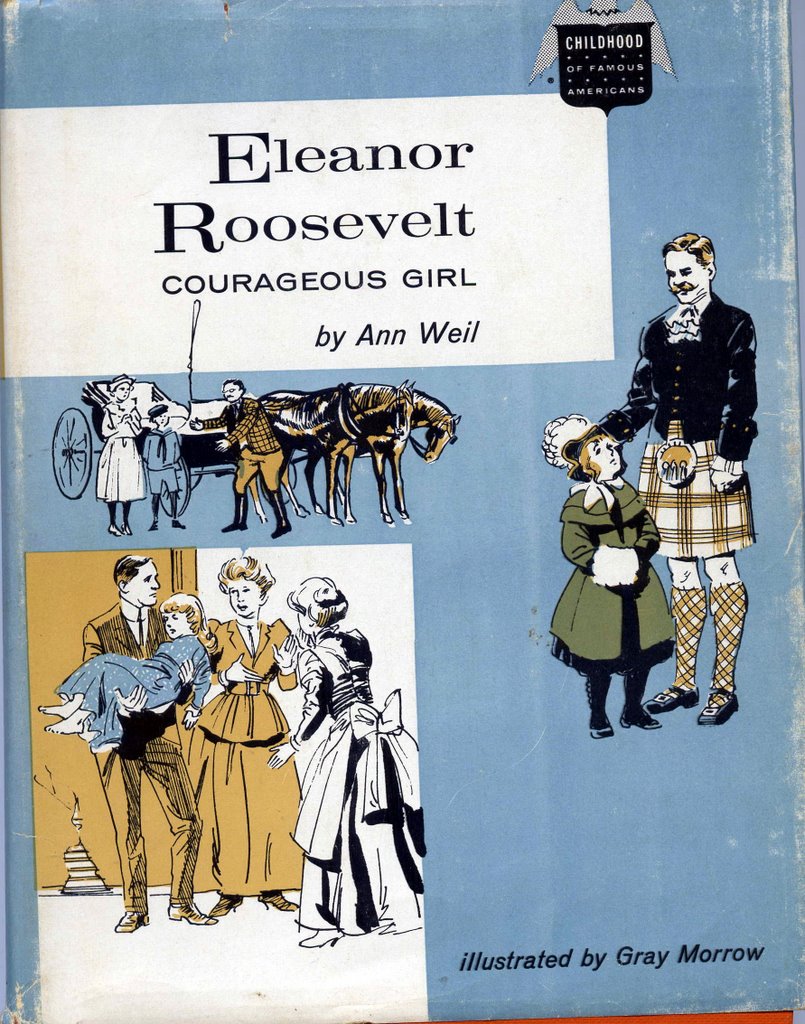
One of my favorite illustrators is the late Gray Morrow, a unique craftsman in the comics industry in that his artwork always looked more realistic than that of his peers. He was also known for his often garish movie posters and beautiful science-fiction magazine illustrations. In 1965, however, Gray drew the illustrations for this book about the girlhood of Eleanor Roosevelt. Here you see the cover and just a few of the many partially colored sketches from the book. The series of which this volume was a part also featured several other volumes illustrated by comic artists including two by Wallace Wood. Many of these editions have been brought back into print in recent years (with new books added) complete with the original illustrations so check your local library or bookstore.