


A LOOK AT COMICS, BOOKS, MOVIES, CARTOONS, TELEVISION SHOWS, MUSIC AND MORE POP CULTURE GOODNESS FROM MY VAST AND VIRTUAL PERSONAL LIBRARY!

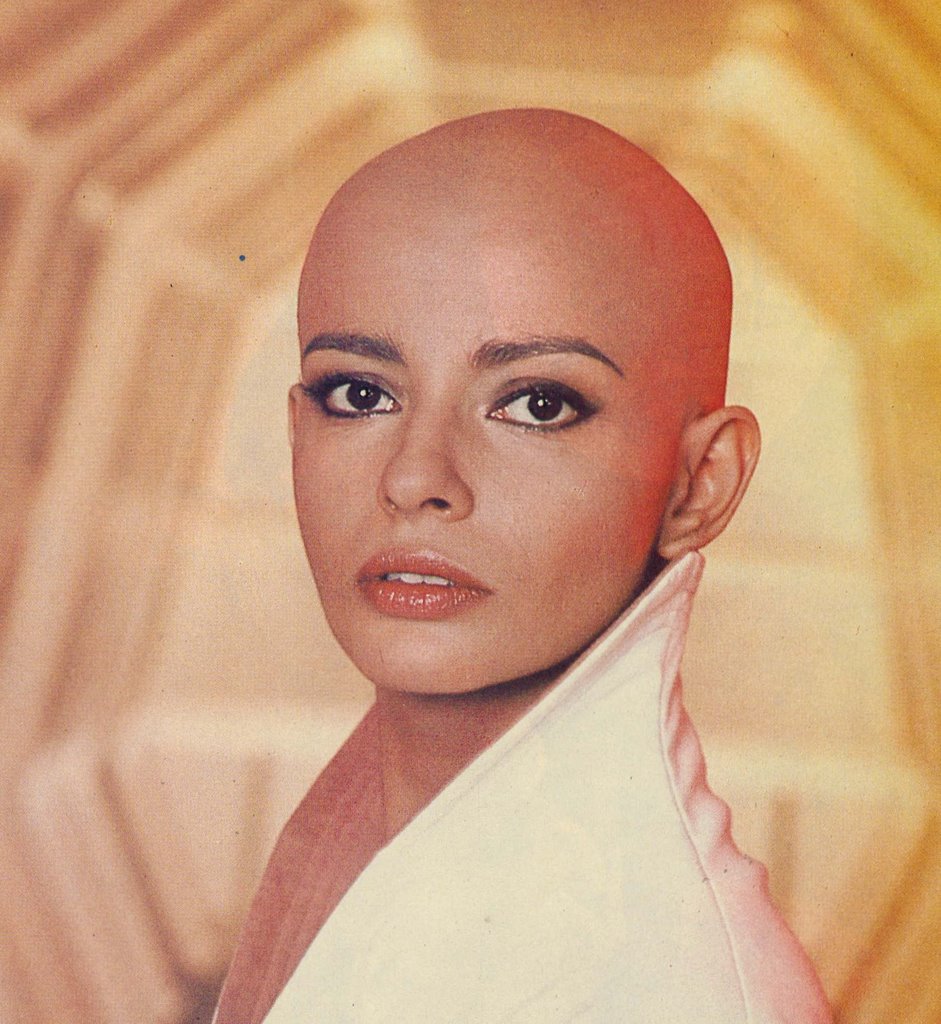
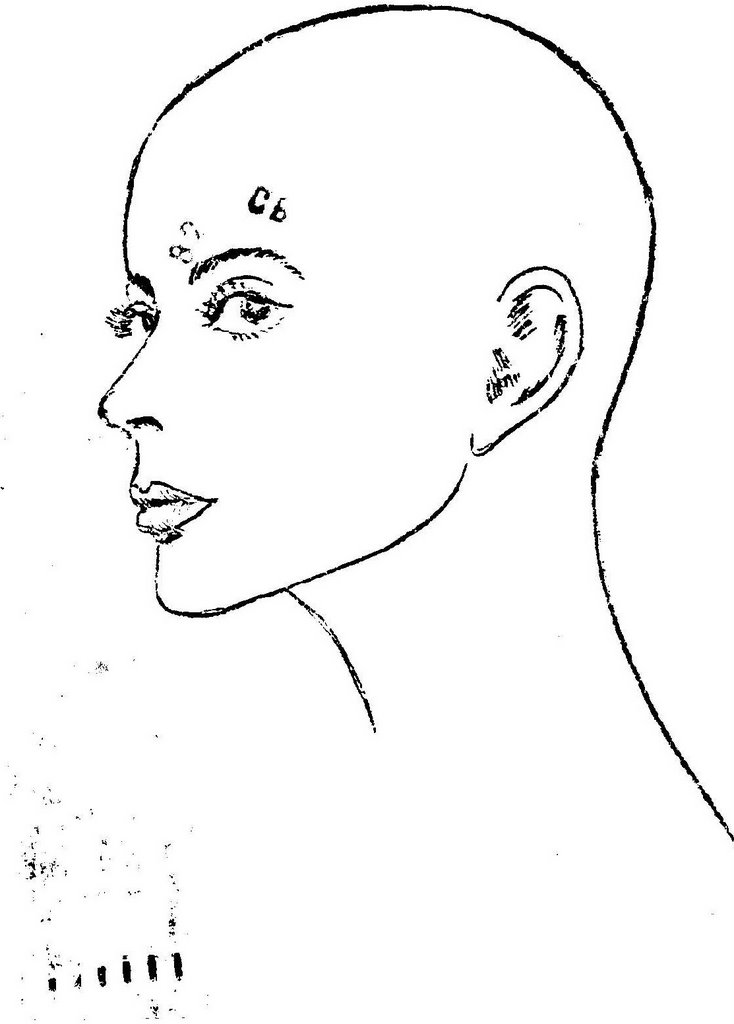 The new series would reunite many of the original cast along with a new Vulcan character and a bald, female Deltan crewmember. Shatner and Nimoy, both working steadily, would not return. The special effects would be accomplished using a new process called Magicam which, if I recall correctly, involved making everything on a miniature scale and then making it look full-size onscreen. Scripts were commissioned , Gene Roddenberry gave optimistic interviews and everyone was excited. This was around 1976. Delays due to the effects testing became regular news in the fanzines, though, and it began to look as though it was never going to happen. Then Paramount decided to do it as a feature film—no, never mind, a series…hmm…well, maybe a feature film. They waffled like politicians for what seemed like light years before finally making it official. STAR TREK would return as a major, STAR WARS-type motion picture directed by Robert Wise, the man who gave you THE SOUND OF MUSIC (Okay, fine but he also gave you THE DAY THE EARTH STOOD STILL!). Because of the increased budget, William Shatner would be returning as Kirk and eventually even Leonard Nimoy agreed to re-don the pointed ears that he’d been trying to put behind him for a decade. The additional characters created for the aborted TV series would be squeezed into the new Roddenberry script. Thus we come finally to the real subject of today’s piece—Persis Khambatta.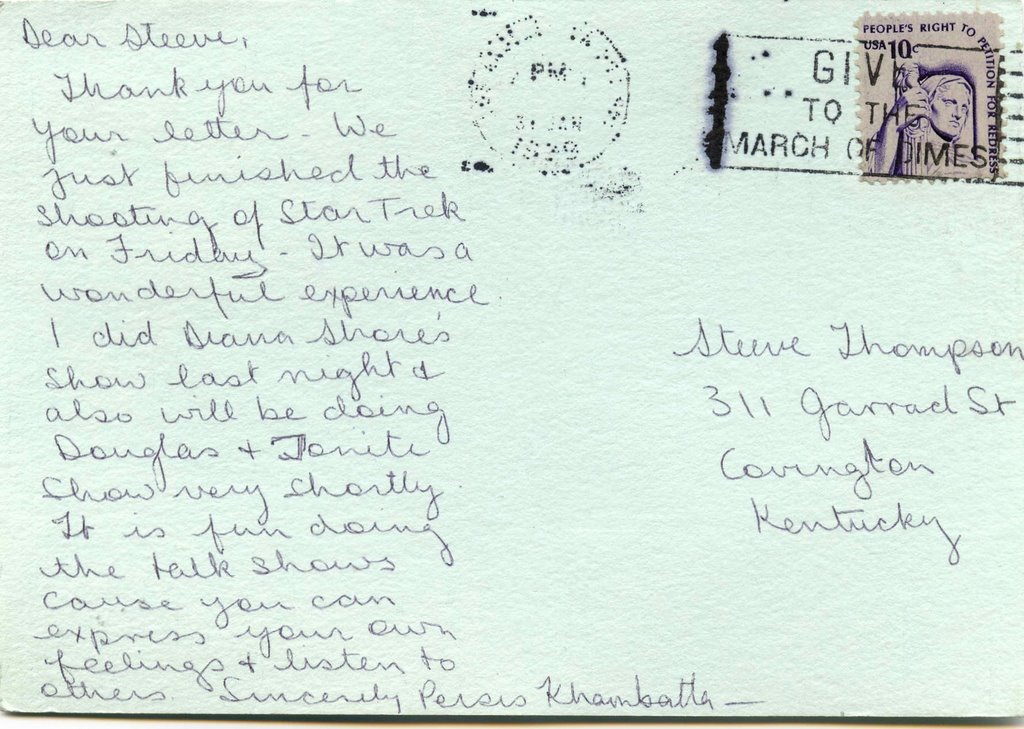
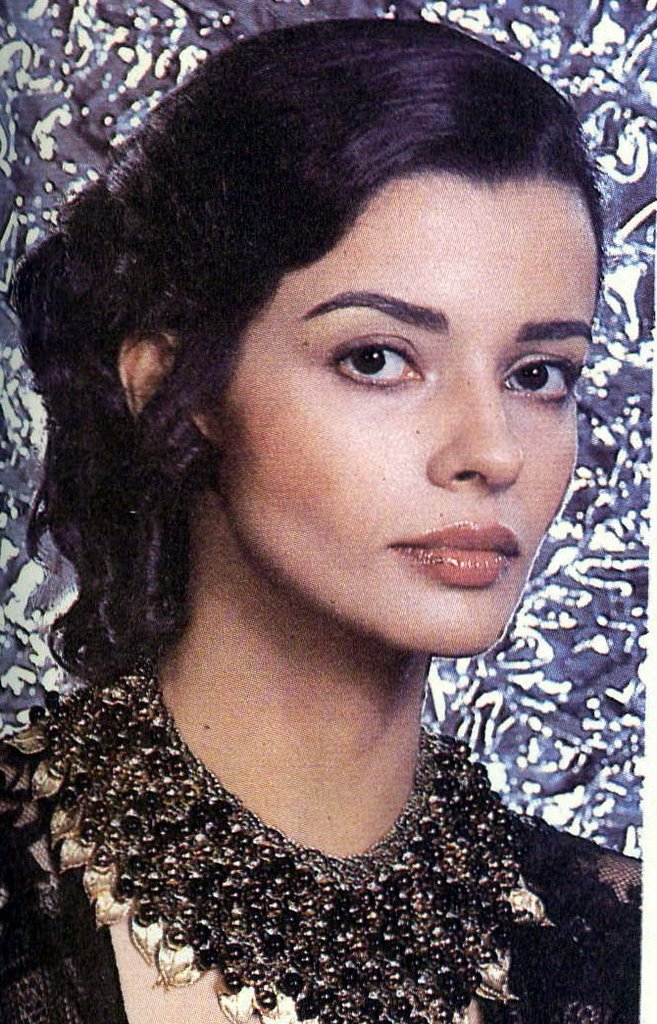 Her unusual and certainly beautiful clean shaven look in the film apparently turned off a number of folks but it got her a lot of press. For awhile it looked as though she might actually be successful in Hollywood…but then she grew her hair back and looked just like any number of other foreign actresses trying for parts in the US. She was cast as a terrorist in NIGHTHAWKS, to this day Sylvester Stallone’s best film, but her career stalled soon afterward. It didn’t help that she was in a nasty motorcycle accident in the early eighties, followed not long afterwards by needed heart by-pass surgery. She acted occasionally, mostly on television, but was never again given a major role in a feature film. Her last acting role was on an episode of LOIS AND CLARK in 1993. She returned to India and published a book for charity but soon fell on hard times herself. In 1998 (in spite of some initial reports that it was a suicide) Persis Khambatta died of a massive heart attack. The image remains, though, and her unique role in the rich tapestry of STAR TREK history ensures that she will be remembered.
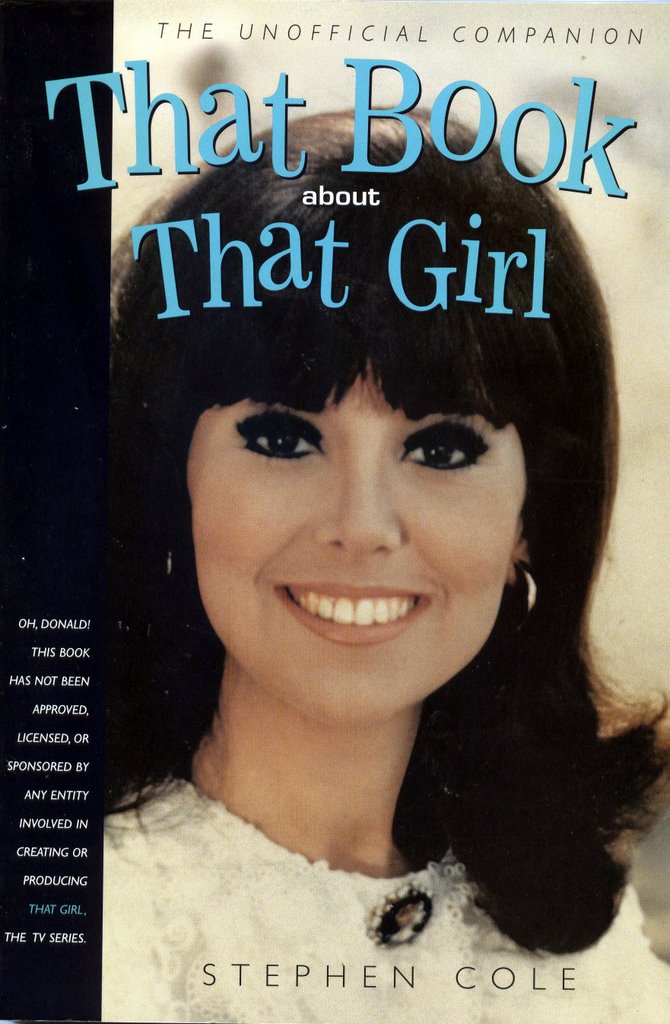
 (played New York Jewish for some reason. In the original pilot even moreso by Harold Gould!) and Rosemary DeCamp as her understanding mother. At various times there were neighbors, friends and agents played by, among others, LOVE BOAT’s Bernie Kopell, Ruth Buzzi, Reva Rose and a beardless George Carlin! Ann’s career tended to take the fore in plots that dealt with auditions, plays, commercials and model shoots. The standard joke was that she lived in a pretty nice apartment for a struggling actress (who took odd jobs between acting gigs) and never seemed to wear an outfit more than once.
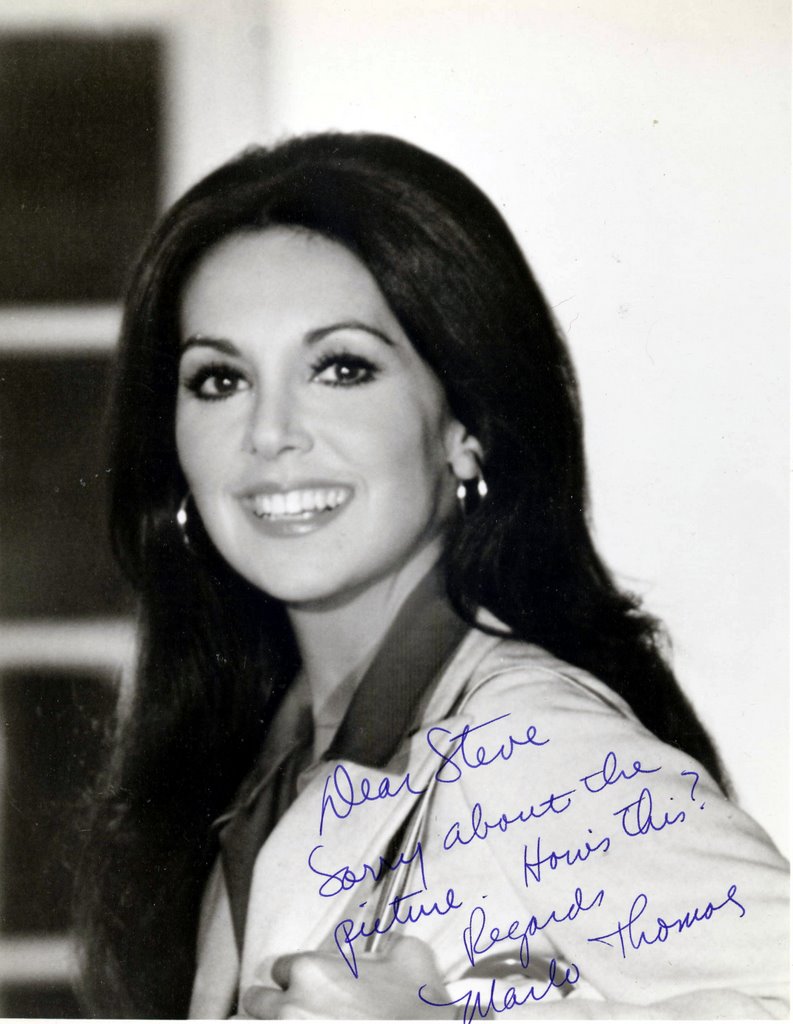
  Donald (Ann always called him that, not "Don" or "Donny" or even "Bobo") was a successful magazine writer who wanted to be a novelist. He was quite square by sixties standards and straight-laced perhaps beyond all reality but it fit in with this show. In the show’s final season, the pair got a little hipper with new hairstyles and more "with it" clothing. They actually got engaged and even the theme song got words! The series ended with them still unwed as Marlo has said (and rightfully so based on the track record of other series) that their marriage would be the kiss of death for the relationship and the series. While Ted Bessell was alive, there was talk of a possible reunion. Marlo had gone on to a marvelous career as an author and a humanitarian and Ted had become a successful director. In fact, at one time, he was set to direct the big-screen version of BEWITCHED (as released, the film is dedicated to him). I exchanged several letters with Marlo Thomas in the early eighties by writing her in care of Phil Donahue (figuring—apparently correctly—that husband Phil could just hand her the letter and she was more likely to see it) and continue to admire and appreciate her. There was a great book about the show (see above) andI bought the 3 tape VHS set a few years back. Hopefully I’ll soon be able to afford the new DVD box set. I can’t wait to renew my acquaintance with Ann Marie, television’s first liberated woman…you know…THAT GIRL!


 the turn of the century. If you had told me we would have more than a hundred channels and still not be able to find anything worth watching most of the time I simply would not have believed you. Let’s get a couple channels that just rerun 1947-1974. Now THAT was good television! MY MOTHER, THE CAR and THE PRUITTS OF SOUTHAMPTON may have seemed stupid at the time but then we’d never seen JACKASS or FEAR FACTOR. Sigh.


 (one of the greatest of all radio stars) this time as "Uncle Harry." Watching some of these episodes "Little Lucie," as she was called in spite of her height, obviously had a lot to learn but this was certainly a good place in which to learn it. HERE’S LUCY frequently featured guest stars and this DVD highlights this well, presenting episodes with Ann-Margret, Johnny Carson, Ginger Rogers and the famous Richard Burton/Elizabeth Taylor episode. Jack Benny appears in two episodes as well as a long clip from his own TV special, JACK BENNY’S CARNIVAL NIGHTS guest-starring Lucy. Perhaps the best part of this superbly compiled DVD set is that many episodes feature illuminating, nostalgic commentaries by Lucie (who has long-since become the keeper of her mother’s flame) and Desi. Wayne Newton and Carol Burnett even contribute commentaries to episodes in which they appeared. HERE’s LUCY offered old-fashioned, family-friendly sketch comedy that lasted well into the ALL IN THE FAMILY years. Desi left the show before it ended. Lucie stayed but then spread her wings on stage and in TV movies such as one in which she portrayed the ill-fated Black Dahlia.
 Our paths crossed in 1977 when I was 18 years old. Lucie, by then an established stage star, was appearing in summer stock in Dayton, Ohio in SEESAW, a musical version of the Shirley MacLaine/Robert Mitchum film, TWO FOR THE SEESAW. I had previously had some success with writing to celebrities appearing on tour at the theater so I tried it again. Honestly, I don’t recall one word of what I said to Lucie in my letter but apparently it was enough to make her blush (and yet not enough for her to get a restraining order).
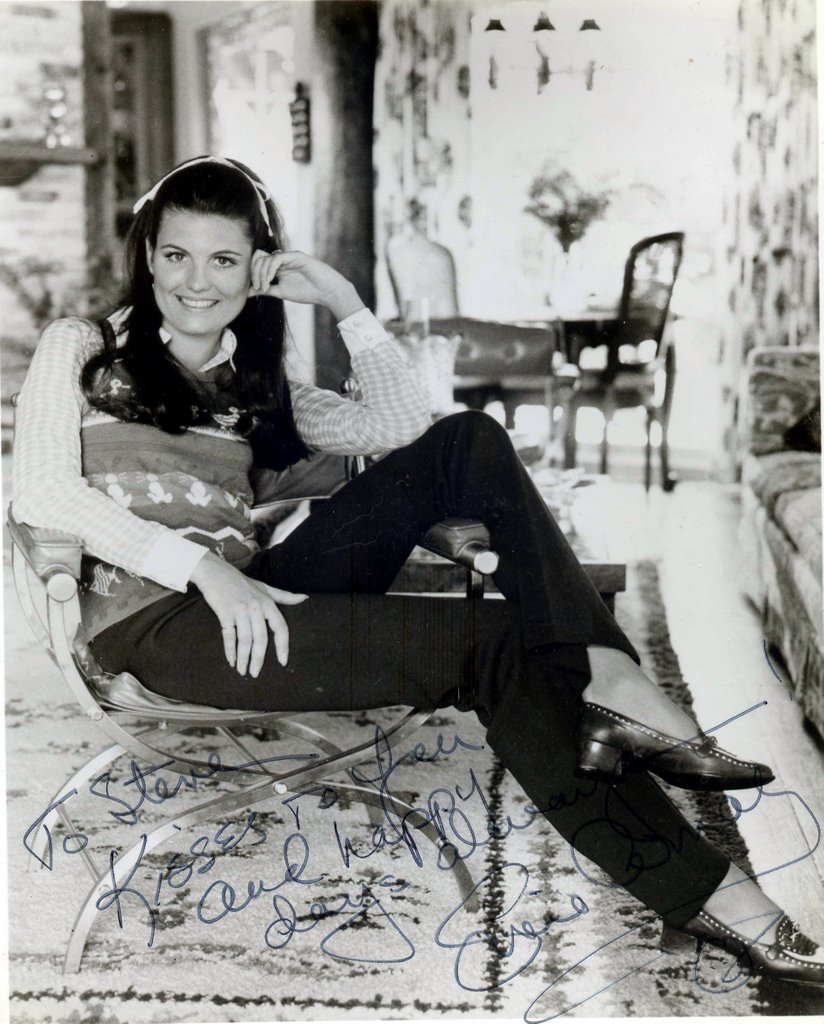
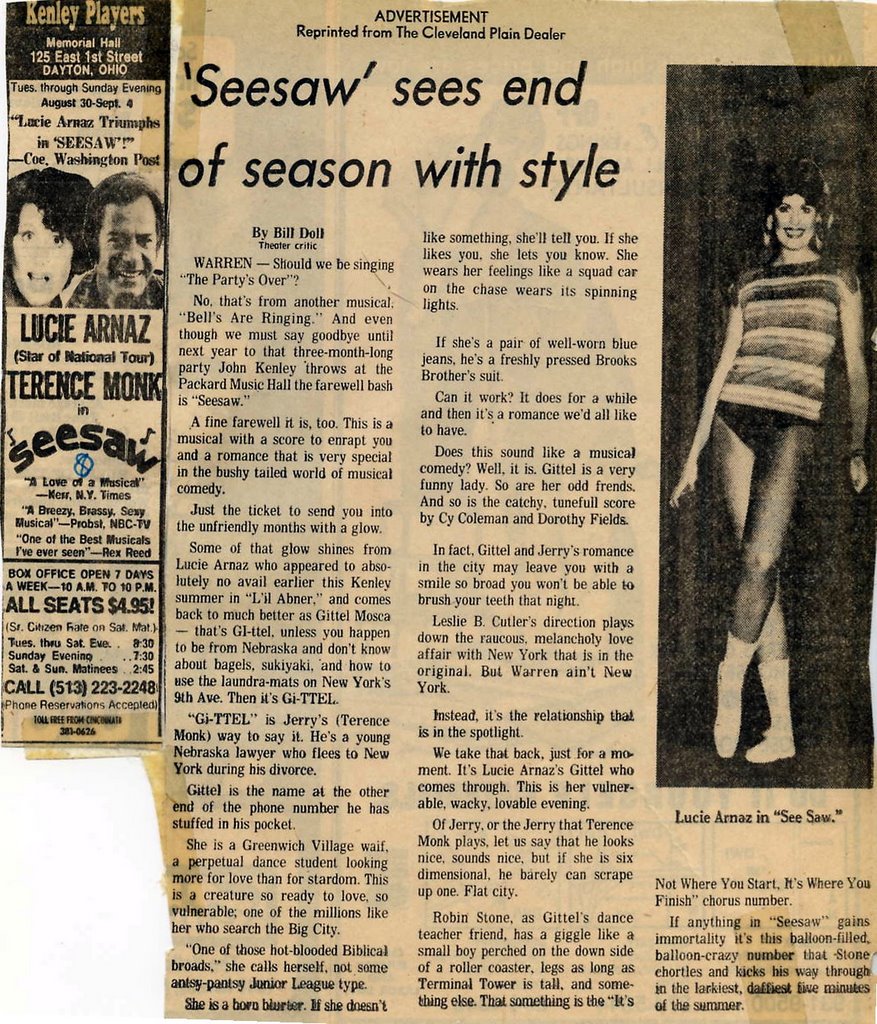 I talked my parents into going with me to a matinee and I loved it! It was only the second professional stage play I had ever seen! To this day I sometimes get the big show-stopping number, IT’S NOT WHERE YOU START, IT’S WHERE YOU FINISH stuck in my head (and this week, that might actually be encouraging!). A few weeks after we saw her, I received a big gray envelope in the mail from Lucille Ball Productions containing the picture seen here and the brief note on Lucie’s cardboard stationary.
 JAZZ SINGER remake sunk, Lucie’s career took a dive along with it. Over the years, she became the family archivist, producing and/or overseeing numerous projects dedicated to preserving the memory of her famous parents. Lucie has also continued working with choice roles in a number of TV series and even a brief run with her own sitcom in the eighties (I may have been the only one watching). At this writing, IMDB lists two potentially major releases featuring Lucie Arnaz in various stages of completion. Given the chance, I’ll definitely see them. Perhaps more than just about any other celebrity, seeing Lucie Arnaz is like spending time with an old and dear friend. If you'd like to spend a little time with her she has a marvelous website , Lucie Arnaz -- The Official Lucie Arnaz Website. With any luck, as she says in her note, we will meet still. I’d like that. I love Lucie.
